
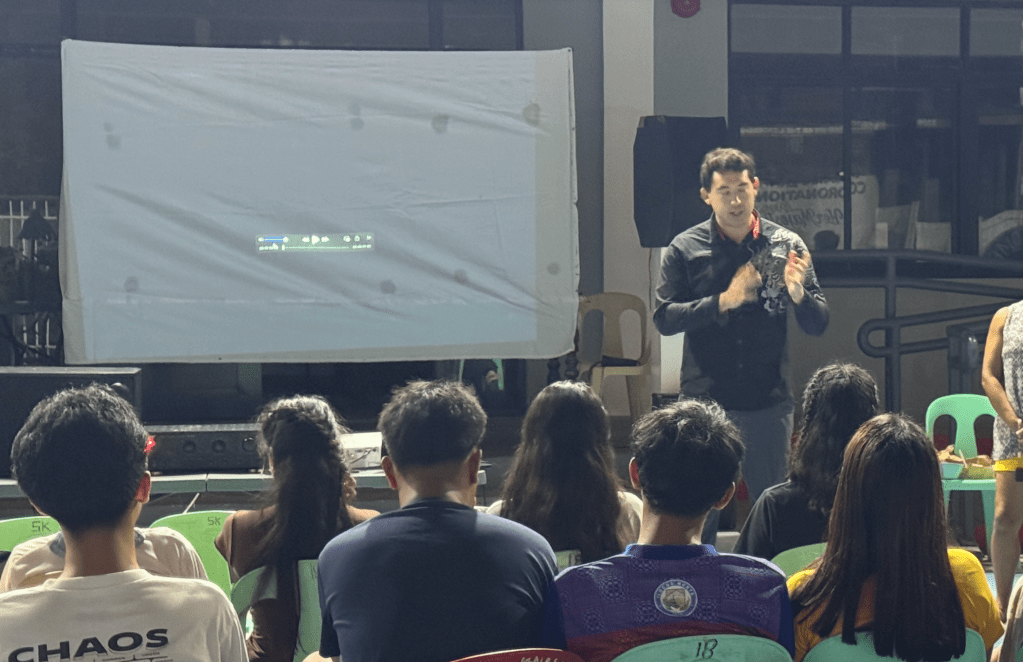
A special screening of the documentary film “Occupied Okinawa” was held for a youth group of around 50 people in the Philippines. The film, directed by first-time filmmaker Robert Kajiwara, aims to introduce Okinawan culture, history, language, and current issues, including discussions on the presence of U.S. military bases in the region.
The event, held at a local community center, was organized by the Peace For Okinawa Coalition at the invitation of local Filipinos. The audience, mostly composed of high school and college students, were given the opportunity to learn about the historical ties between Okinawa – then known as the Ryukyu Kingdom – and the modern-day Philippines.
Prior to the screening, Kajiwara spoke to the crowd, explaining Okinawa’s historical ties to the Philippines. “Historically, the Ryukyu Kingdom sent 6-8 trade ships to the area now known as the Philippines every year.”
He explained the importance of understanding Okinawa’s history and culture, as well as the ongoing struggles faced by the people of Okinawa due to the presence of U.S. military bases on the island.
The documentary, which has been screened in various countries around the world, received positive feedback from the Filipino youth group. Many expressed their newfound appreciation for Okinawan culture and their support for the people of Okinawa in their fight for peace and sovereignty. “Okinawa looks like the Philippines,” said one viewer. “I didn’t realize that Okinawa and the Philippines had so much in common.”



 Okinawa News Network
Leave a comment